The UK’s agreement with the Gulf Cooperation Council marks an important development in relations between Britain and the Gulf, including Oman. According to the Department for Business and Trade’s preliminary estimates, the agreement could add £3.7 billion to UK GDP each year in the long run, increase real wages by £1.9 billion annually, and raise total UK-GCC trade by 19.8%.
For Oman and the UK, the agreement creates new opportunities to strengthen cooperation in areas such as trade and investment, clean energy, advanced manufacturing, digital services, logistics and healthcare. It is also intended to make it easier for businesses to trade across borders through tariff reductions, simpler customs procedures, improved business mobility and clearer rules for services and data flows.
The deal highlights the continued importance of the Oman-UK partnership and offers a framework for further collaboration in sectors that support growth, innovation and long-term economic development.
Key Deal Highlights:
- UK becomes the first G7 country to agree a trade deal with the GCC, bolstering its partnership with a strategically vital region and securing economic resilience at home.
- Deal removes tariffs on food exports, medical equipment and advanced manufacturing, plus first-of-its-kind GCC commitments on free flow of data.
- Trade in goods and services between the UK and Oman currently stands at £1.8 billion, supporting jobs, investment and economic growth
The UK Perspective
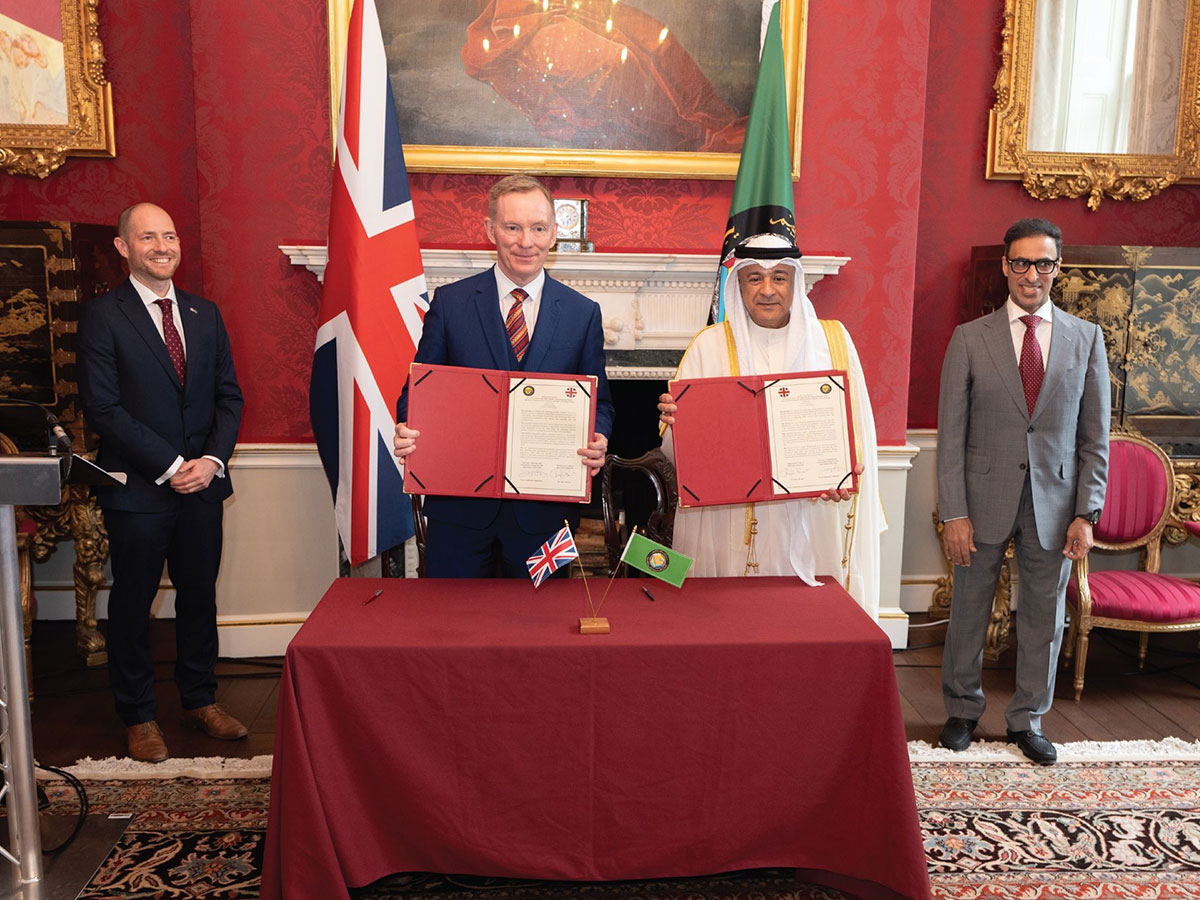
The UK could see a boost to growth and higher wages for decades to come after becoming the first G7 country to secure a trade deal with the GCC, strengthening economic partnerships with the region, supporting jobs in the long term, and bolstering domestic resilience.
This will remove an estimated £580m in duties a year, based on current UK exports to the GCC, once the agreement is fully implemented, with £360 million worth of this to be removed on day one of the agreement entering into force – as well as renewed certainty for services firms, making it easier for UK companies to expand and partner in the Gulf, and supporting high-quality jobs for years to come.
Many sectors including the food and drink sector are set to benefit from the deal once it enters into force. UK exports of cereals, cheddar cheese, chocolate and butter are just a few of the goods expected to become tariff-free, supporting British industry to grow.
Prime Minister Keir Starmer said:
"Today’s agreement is a huge win for British business, and for working people who will feel the benefits in the years ahead through higher wages and more opportunities. This government has now secured five major trade deals with international partners, delivering on our commitment to drive growth, support jobs and strengthen the UK economy. The Gulf states are valued economic partners and this agreement deepens that relationship, building trust and unlocking new possibilities for trade and investment. The deal is estimated to add £3.7 billion to the UK economy every year in the long run when compared to 2040 projections and £1.9 billion in real wages, delivering for businesses and working people."
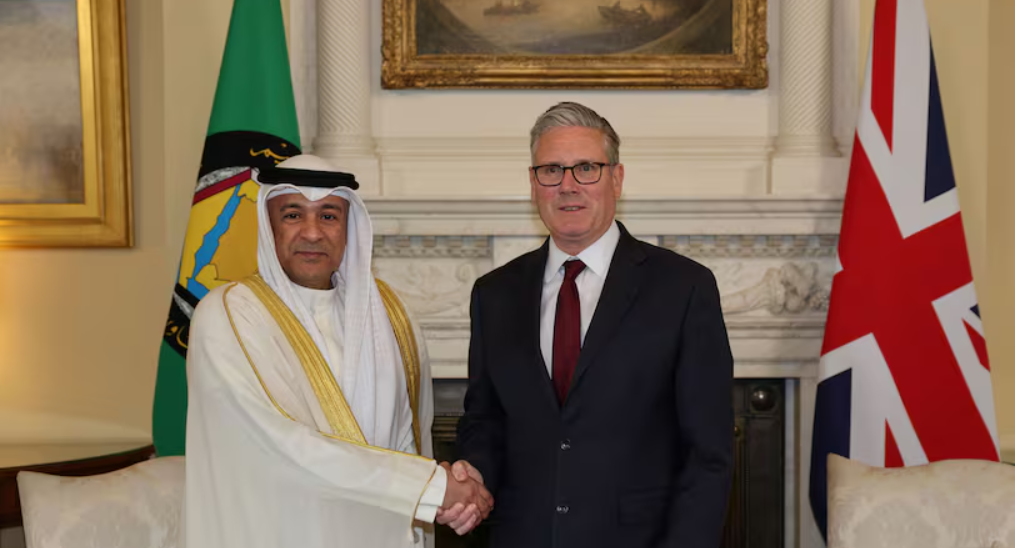
Business and Trade Secretary Peter Kyle said:
"I’m proud that the UK is the first G7 country to secure a modern and ambitious trade deal with the GCC – an important and growing set of markets.
For this Government to meet the challenges that our country faces, incremental change won’t cut it. That’s why major trade deals like this one, and that we secured with India, the US, South Korea and the EU, are vital for moving the dial towards long-term, sustainable economic growth with benefits people and businesses can see and feel. At a time of increased instability, today’s announcement sends a clear signal of confidence - giving UK exporters the certainty they need to plan ahead and reinforcing the strength and stability of the UK’s trading relationship with the Gulf at a critical moment."
The UK autos industry alongside high street names like Holland & Barrett stand to gain significantly from the deal, through tariff reductions, stronger Intellectual Property protections and simplified customs processes. By reducing the burdens that create barriers to trade, it will give UK businesses a competitive edge.
Anthony Houghton, Group Chief Executive Officer of Holland & Barrett, said:
"We welcome this landmark agreement, which deepens economic ties between our markets. The Gulf is strategically important for us, as we continue our growth journey and expand our international presence. Fair, reliable and low-barrier trading is essential for businesses to compete and expand internationally with confidence. This agreement provides that stability, supporting companies like ours to grow and serve customers across the region."
Chancellor of the Exchequer Rachel Reeves said:
"This agreement is good for jobs, good for industry and ultimately good for consumers, opening up a world of economic opportunity with a strategically important region. Our fifth trade deal since taking office, it’s proof we are backing British firms to compete and win globally, delivering growth, security and jobs, and that we have the right economic plan."
UK services - which account for around 80% of the British economy and around half of the UK exports to GCC – will gain guaranteed market access under this deal.
In 2024, there were over 400,000 business visits made from the UK to the Middle East so this deal will help British professionals including lawyers, engineers and consultants to travel more easily and stay longer in the region.
Georges Elhedery, Group CEO, HSBC, said:
"The GCC is a region of growing strategic importance and long-term opportunity, and one where HSBC’s heritage runs deep. The UK is one of our home markets and we have a presence in all six GCC states. We see first-hand the opportunity this agreement can unlock and stand ready to help deepen economic ties and support businesses to connect, invest and grow."
Delivering on Key Business Asks: The UK Dimension
The deal will:
- Eliminate duties worth an estimated £580 million a year on UK goods exported to the GCC based on existing trade once fully implemented, giving consumers access to high-quality UK products.
- Remove an estimated £360 million in duties on day one of the agreement entering into force, reducing costs for UK businesses and supporting supply chains.
- Create opportunities for companies producing iconic UK products – from butter and cheddar cheese to biscuits and chocolate – as the GCC imports over 80% of its food.
- Include the most ambitious commitments on customs procedures the GCC has ever signed up to, with customs cleared within 48 hours and perishable goods released in under 6 hours once all requirements are met.
- Lock in clarity and certainty for services exporters, cementing their access to key markets.
- Cut red tape for business mobility, ensuring visa processes are fair, efficient, easier to navigate and increasingly digital.
- Enable UK companies to store and process data outside the region for the first time ever, saving businesses money on setting up costly data centres in the Gulf.
- Unleash the power of international investment and ensure investment disputes are resolved fairly and transparently. Total bilateral investment was £18 billion in 2024 and supports critical infrastructure projects like Heathrow Airport.
- Align with the UK’s Industrial Strategy, supporting key high-growth sectors, including advanced manufacturing, clean energy, and digital technologies.
The Oman Perspective: Accelerating Vision 2040
While much of the immediate commentary surrounding the UK‑GCC FTA has focused on the benefits for British exporters and the UK economy, the deal holds equally significant promise for the Sultanate of Oman – already the UK’s largest foreign direct investment destination in the Gulf – and for businesses looking to invest in the region’s most strategically positioned economy.
For Oman, the FTA is not simply a trade agreement. It is a tool to accelerate its ambitious national development blueprint, Oman Vision 2040, a comprehensive 20-year strategy launched in 2021 under His Majesty Sultan Haitham bin Tariq to transform the Sultanate into a diversified, knowledge-based and innovation-driven economy, and to reduce its dependence on hydrocarbon revenues.
As the Oman Observer reported when the deal was announced in May 2026:
“For Omani businesses, the newly concluded FTA promises faster, more cost-effective access to British markets. The agreement effectively slashes administrative red tape, introduces simplified customs protocols, and eliminates all tariffs on current Omani exports entering the UK immediately upon the agreement entering into force… The deal establishes guaranteed market access backed by groundbreaking commitments on the free flow of financial data, a move expected to significantly empower fintech, banking, and insurance firms looking to expand their footprints into the UK.”
Vision 2040: The Sectoral Priorities That the FTA Can Unlock
Oman Vision 2040 targets a dramatic structural shift: non-oil GDP is set to rise from 61% in 2017 to 91.6% by 2040, as the Sultanate builds new industries and deepens its international trade relationships. The UK-GCC FTA directly supports several of the plan’s key priority sectors:
Logistics and Trade Infrastructure
Logistics is one of the most strategically important sectors in Oman’s diversification agenda. Through its Sultanate of Oman Logistics Strategy 2040, the country aims to become one of the world’s top ten logistics hubs by 2040. Oman’s three strategic ports – Sohar, Duqm and Salalah – sit at the intersection of key global trade routes, connecting Europe, Asia and East Africa. The FTA’s commitments on customs clearance – including goods cleared within 48 hours and perishable cargo released in under 6 hours – directly support this ambition, reducing friction on trade flowing through Omani ports. The UK itself has a strategic interest in Duqm port, having invested £23.8 million in a UK logistics hub there to facilitate Royal Navy deployments to the Indian Ocean.
Renewable Energy and Green Hydrogen
Vision 2040 sets a target to generate around 40% of electricity from renewable sources by 2040, with Oman’s National Hydrogen Strategy positioning the country to become a global green hydrogen export powerhouse, targeting 25 million tonnes of production per annum by 2050. The Sultanate has earmarked approximately 50,000 km² of land with exceptional solar and wind resources – particularly around Duqm, Dhofar and Al Jazir – for hydrogen production, and has established a dedicated state entity, Hydrom, to manage its portfolio of projects. The UK-GCC FTA’s alignment with clean energy, and its support for UK-Oman co-investment in clean tech, creates a natural partnership framework, given the UK’s own net-zero commitments and appetite for securing green energy supply chains.
Manufacturing
Manufacturing is one of Vision 2040’s most ambitious growth targets: the sector’s contribution to GDP is set to rise from 10% to 21% by 2040. Manufacturing is also the fastest growing sector in Oman’s economy today, with 8.3% annual growth recorded in 2024. The FTA facilitates tariff-free access for goods processed or manufactured in Oman into the UK, encouraging foreign companies – including UK businesses – to establish manufacturing operations in Oman that can then export seamlessly back to Britain.
Financial Services and Fintech
The FTA’s groundbreaking commitments on the free flow of financial data – the first of their kind ever agreed by the GCC – open new avenues for Omani financial services firms to expand into the UK. This is directly relevant to Vision 2040’s goal of developing a competitive, innovation-driven private sector. The framework for mutual recognition of professional qualifications will also facilitate the movement of Omani financial professionals between Muscat and London.
ICT, Digital Services and Education
Oman’s ICT sector, home to 6,828 registered companies by 2023, is a cornerstone of the Vision 2040 drive towards a knowledge-based economy. The FTA’s provisions on data flows, digital services and professional mobility align closely with Oman’s goal of attracting global tech investment and building a skilled domestic workforce. UK universities, technology companies and professional training providers are well-placed to partner with Omani institutions to support this agenda.
Tourism
Tourism is identified as a key non-hydrocarbon sector in Vision 2040. Simplified visa processes and improved business mobility under the FTA will make it easier for UK visitors and investors to engage with Oman, while the removal of barriers to professional services will support the growth of Oman’s hospitality and tourism infrastructure.
Oman as a Strategic Investment Gateway: The India CEPA Dimension
Perhaps one of the most compelling arguments for UK companies to look seriously at Oman as an investment destination is the Sultanate’s unique position at the intersection of multiple major trade agreements – a positioning that makes it arguably the most strategically versatile economy in the GCC.
On 18 December 2025, India and Oman signed a Comprehensive Economic Partnership Agreement (CEPA) in Muscat – the first bilateral trade agreement Oman has signed in nearly two decades, and only the second nation after the United States to have secured a comprehensive bilateral trade pact with Oman. The CEPA entered into force on 1 June 2026, the same month the UK-GCC FTA was announced. This remarkable convergence of trade agreements creates a genuinely distinctive opportunity for Oman – and for international businesses investing there.
What the India-Oman CEPA Means
The India-Oman CEPA is a comprehensive, deep-integration agreement covering trade in goods, 127 service sub-sectors, professional labour mobility, and regulatory cooperation. Under its terms:
- Oman commits to zero duty on 98.08% of its tariff lines, covering approximately 99.38% of India’s export value.
- Indian exports – including textiles, pharmaceuticals, engineering products, electronics, gems and jewellery, and automobiles – now enter Oman at significantly reduced or zero cost.
- Oman’s three major ports (Sohar, Duqm and Salalah) serve as gateways not just to the Omani market, but to the wider GCC and East Africa, providing Indian exporters – and by extension, any manufacturer operating in Oman – with exceptional regional reach.
Why This Matters for UK Investors
Oman is a neutral, rules-based manufacturing and logistics platform, where value can be added so goods qualify under trade agreements and can be sold across competing blocs with lower friction. The logic is straightforward: a UK company establishing manufacturing or processing operations in Oman can, with appropriate value-addition and origin compliance, potentially benefit from:
- Tariff-free access to the UK market under the UK-GCC FTA
- Preferential access to India’s vast and growing economy under the India-Oman CEPA
- Existing preferential access to the United States under the US-Oman FTA (in force since 2009)
- Access to GCC markets through Oman’s membership of the bloc and its world-class port infrastructure
- Access to East African markets via Oman’s strategic position at the mouth of the Arabian Sea
This multi-corridor trade logic is not merely theoretical. India’s bilateral trade with Oman grew to USD 11.18 billion in the 2025-26 financial year, with Oman serving as India’s second-largest trading partner in the Gulf. The India-Oman CEPA is specifically designed to turbocharge this relationship – and UK companies with supply chain or manufacturing interests in either market should take note.
Oman is also investing heavily in the infrastructure to support this hub ambition: RO 3.4 billion in logistics investments are underway, the Salalah Port completed a USD 300 million expansion in February 2025 – increasing its capacity from 4.5 million to 6.5 million TEUs – and the Muscat Metro project is progressing, with a 55-kilometre route projected to serve over 400,000 passengers daily by 2040.
A Relationship Built for the Future
The UK-GCC FTA is the beginning of a new chapter in the UK-Oman relationship. For British businesses, it offers improved market access to one of the Gulf’s most stable, open and strategically positioned economies. For Oman, it provides an important new tool to accelerate Vision 2040’s ambitions across logistics, manufacturing, clean energy, digital services and tourism.
What makes the Oman opportunity especially compelling is its unique web of trade agreements. With the UK-GCC FTA now in place alongside the recently enacted India-Oman CEPA, and the existing US-Oman FTA, Oman offers UK investors and manufacturers a rare combination: a stable, business-friendly Gulf economy that simultaneously serves as a preferential gateway to the UK, the United States, India’s 1.4 billion consumers, and East African markets.
The FTA also reflects the depth and longevity of the UK-Oman bilateral relationship – one rooted in shared history, security cooperation and mutual respect. As trade in goods and services between the two countries stands at £1.8 billion today, the conditions are now in place for that figure to grow substantially in the years ahead.
For businesses in both countries, the message is clear: the time to explore the possibilities of this partnership is now.
Data sources:
Read more on the FTA here