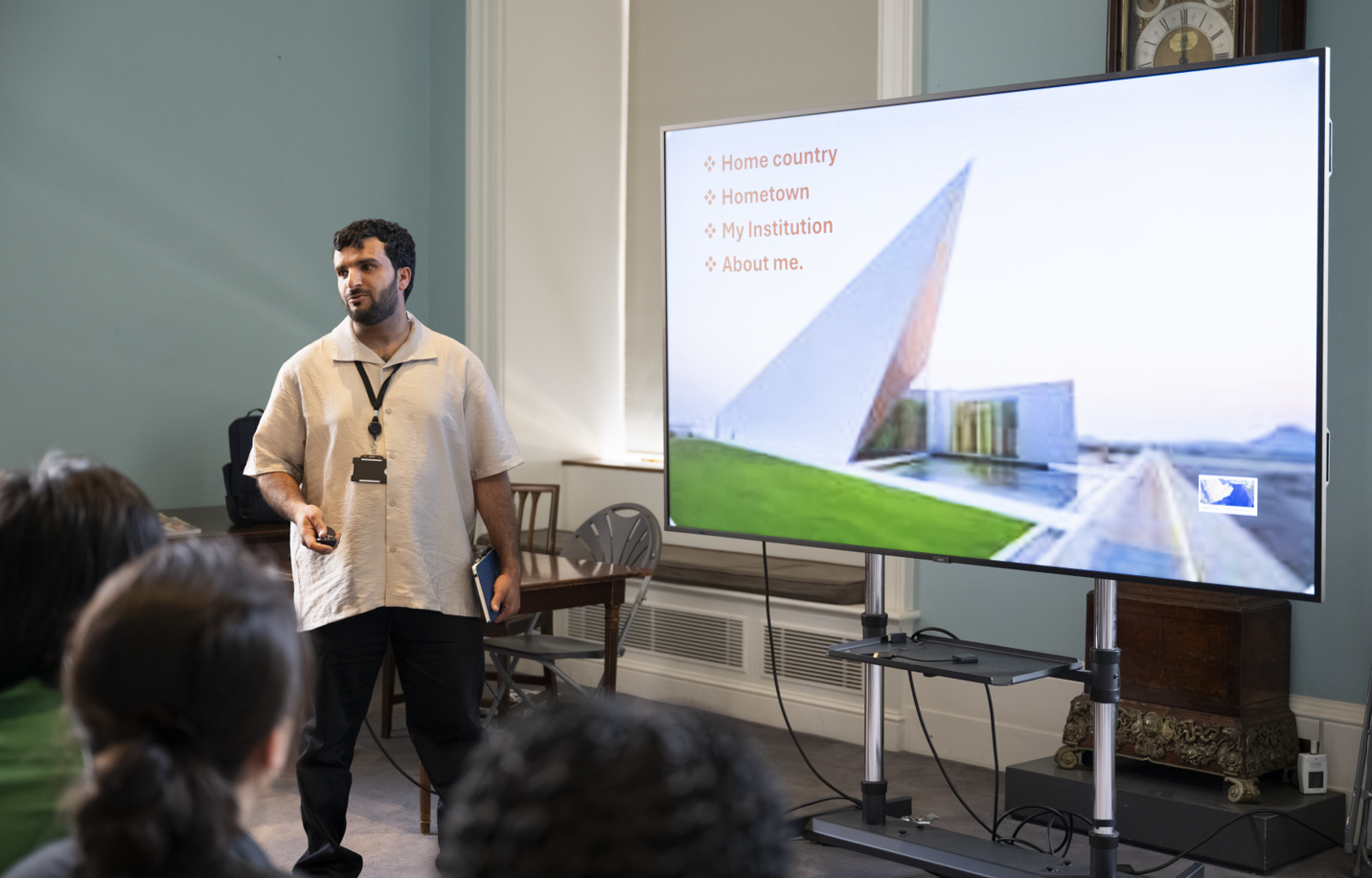
The British Omani Society was honoured to fund the participation of Hilal Al Hashemi on the British Museum's International Training Programme 2026, as part of our charitable objectives to advance the education of Omani nationals by the promotion of learning and a wider knowledge by assisting individuals and organisations by providing bursaries, awards, scholarships, training, apprenticeships and financial and logistical support. Read more here.
Hilal Al Hashemi is the Stores Supervisor at the Oman Across the Ages Museum in Oman. In summer 2026 he participated in the British Museum’s annual International Training Programme (ITP). This is a highly successful residential programme hosted jointly by the British Museum and UK partner museums. The ITP aims to foster specialist skills, a sense of shared cultural purpose and good museum practice among participants, who come from countries around the world.
.jpg)
During their time spent at the British Museum and one of six UK partner museums, participants work with a wide spectrum of museum and heritage professionals, from curators to collection care staff. Through the exchange of knowledge, skills and experiences, the ITP is creating a global network of colleagues, who will shape the museums of the future. The ITP is free for participants and Hilal was supported by a generous grant from the British Omani Society. He has written a report about his experience on the ITP.
‘Through this professional programme during 6 weeks of training in the British Museum and partner museums I gained a wide range of experiences about collection care, conservation, scientific research, museum trails, museum learning programmes, exhibition design, museum emergency plans, and environmental sustainability. Also, we have had many scientific trips to: Stonehenge, V&A Storehouse, London Mithraeum, museums in Cambridge, Knole National Trust, British Museum Archaeological Research Collection and the Wellcome Collection. The best thing was moving to the partner museums around the UK for ten days.
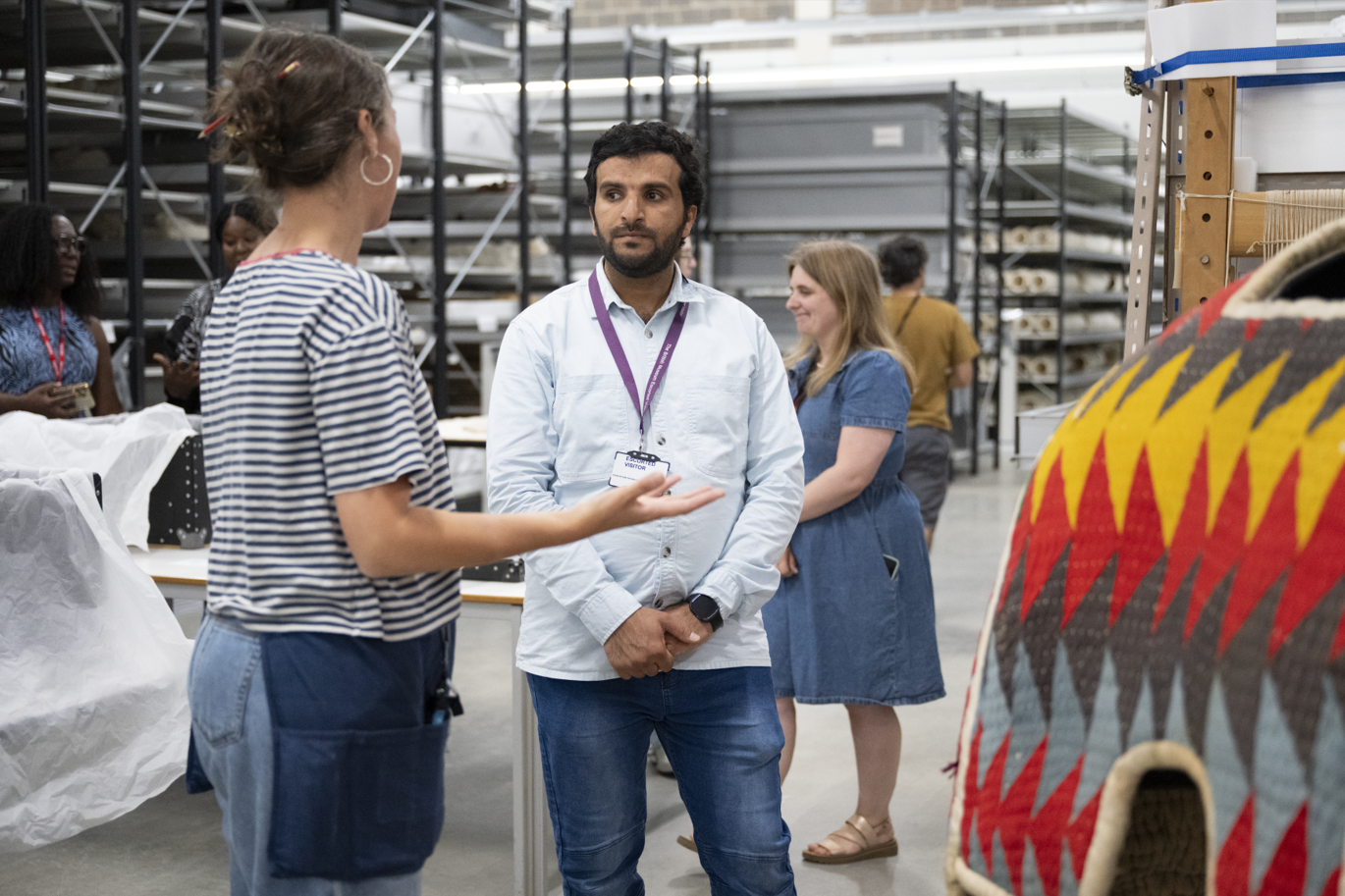
I learned many lessons from the ITP, and I want to shift all what I learned to my home institution. First, as I’m Stores Supervisor at Oman Across the Ages, I learned new practices about collection packing and safety handling. They explain the methodology of packing collections in a wood box. On the box there are some diagrams like fragile, umbrella diagram to keep from water or rain, arrows diagram to know the right way of keeping the box, and the cover of the wooden box are fixed with special screws. So, I will try my best to use this training in our museum.
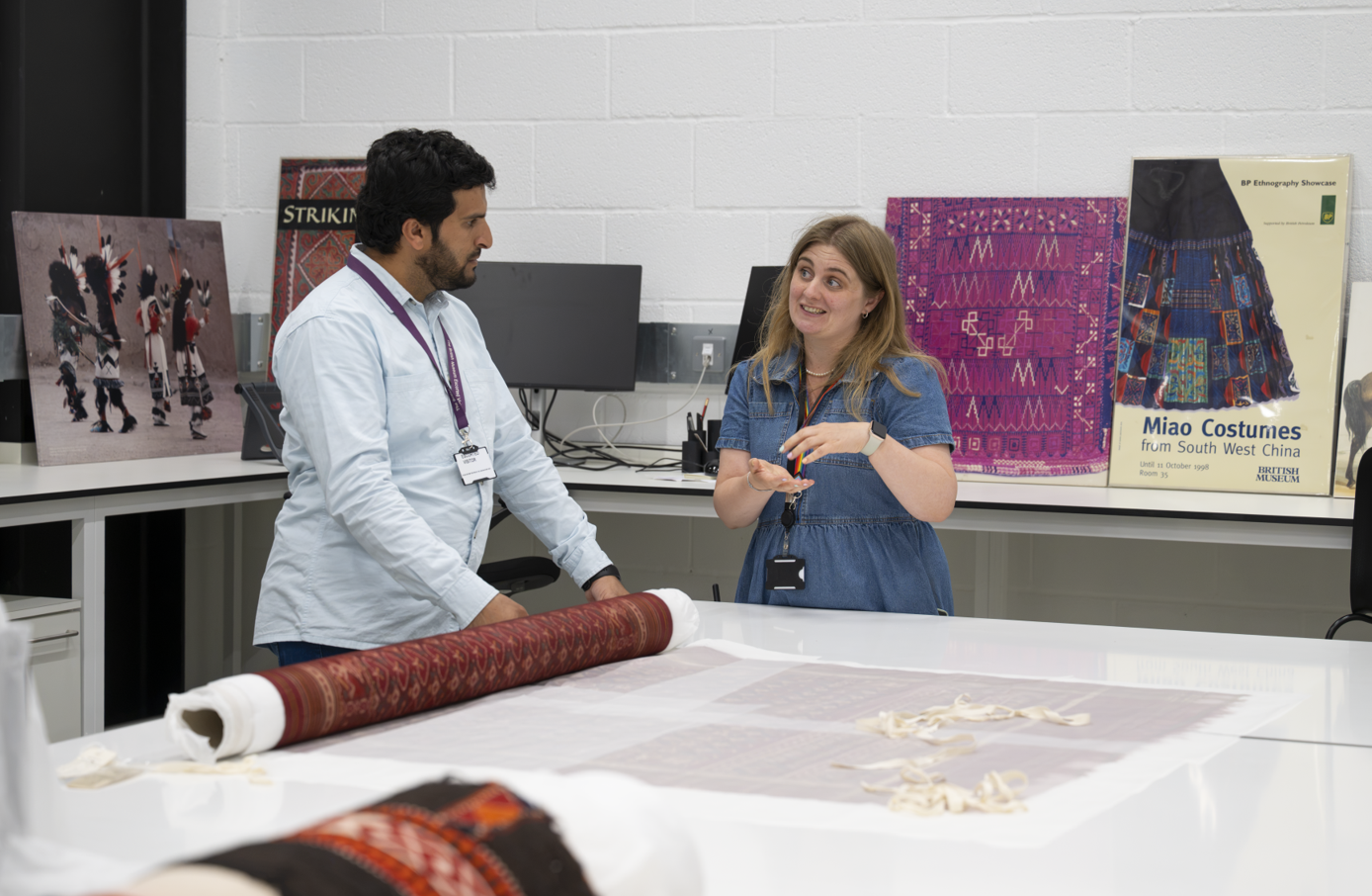
On a visit to the British Museum Archaeological Research Collection, the conservator made carboard cases for old, fragile textile objects. Also, I got the chance to discuss many ways of storing big size textiles or uniforms or mixed textiles with leather and metal. I have already discussed with our management to have same for our textile store.
I learnt conservation can be preventive or interventive. During the ITP I attended three sessions, one in theory and two in lab work and I got the chance to ask about the material used in conservation and the scientific methodology of each category of collections, organic or unorganic, metal, textile, paper. During the Lincoln Museum conservation lab visit we learnt how clean mold from the stone board and then treat the discoloration with a special coloring technique. At the Wellcome Collection I learnt the right environment for storing video tape and carbon photo.
At the Nottingham University Museum, Clare Pickersgill, Museum Keeper, promised to arrange online meetings with me and my colleagues to discuss how we can make a perfect emergency plan. Also, the management of Wellcome collection are going to send us their emergency plan.
The best programme was on sustainability, where we learned that is important to have responsibility about the environment as a museum, for example we can reuse material and reduce transportation and use solar panels for electricity generating. We learnt about this at the Wellcome Collection where we found real practice for environment and sustainability.
ITP was a 44-day learning experience and getting advanced knowledge in museum practice in: collection care, curator, gallery designer, archaeologist in field and digging for human remains and historical collection, conservator to protect the collection. I can transfer all what I learn from the programme and most of it is applicable even though there are barriers of financial and staffing resources, but we can cross all these barriers through time and with organised planning. I liked the programme’s structure, and it was well organised by a perfect ITP team. Finally, I want to thank all the organisers for the programme, the ITP team and partner museums coordinating and everyone supporting the success of the programme: The Middle East Department and all other departments, the British Museum director and all donors who support the programme. Finally, special thanks for the British Omani Society who supported me.’