As part of a student exchange programme between the Global College of Engineering and Technology (GCET) in Oman and the University of the West of England (UWE Bristol), supported by a grant from The British Omani Society, British students visited Oman in January 2026 to explore urban sustainability and climate resilience. Through workshops, field visits and cultural exchange activities, participants gained valuable academic and practical insights while building connections with peers and professionals. In this blog series, the students share their experiences, reflections and key takeaways from their time in Oman.
Blog writen by Alina Tarasova, Year 2 Student, BSc (Hons) Architectural Technology and Design.
When I first heard about the opportunity to take part in a student exchange in Oman, I expected to visit remarkable buildings and experience a new culture. What I did not expect was how much the trip would reshape the way I think about architecture. As a second-year Architectural Technology and Design student at UWE Bristol, the experience became far more than a study visit, but rather an opportunity to understand how culture, climate and history influence the built environment and architectural approaches.
The exchange brought together students studying the same course in both the UK and Oman, creating a unique opportunity to learn not only from the places we visited but also from one another. Although we shared the same discipline, our discussions revealed how differently architecture responds to local needs, environmental conditions and cultural traditions.
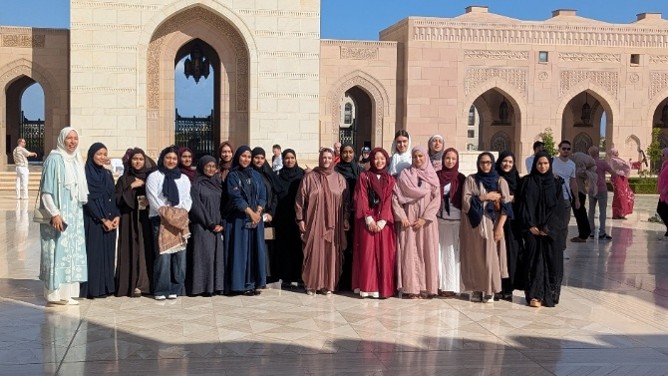
One of the highlights of the trip was visiting the Sultan Qaboos Grand Mosque. Beyond its impressive scale and craftsmanship, we were fascinated by how thoughtfully every element had been designed. The careful use of natural light, high-quality materials and spacious interiors created a calm and welcoming environment while reflecting Oman’s cultural identity. Seeing these design principles applied so successfully remind that architecture is not only about aesthetics but also about creating spaces that enhance the experience of those who use them.
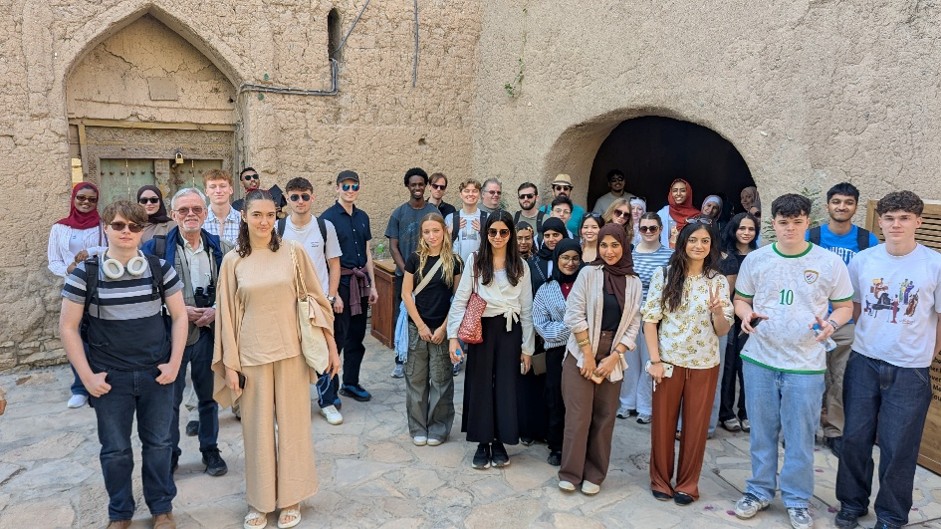
A different perspective came from exploring Mutrah Souq, which is a huge souvenirs market located right by the water. Walking through the narrow streets of the souq, you notice how the urban layout naturally provided shade and encouraged social interaction, an effective response to Oman’s hot climate without relying on modern technology.
The contrast between historic sites such as Nizwa and contemporary buildings like the Oman Across Ages Museum demonstrated preservation of tradition while embracing innovation. The museum, in particular, showed that modern design can celebrate a nation’s identity rather than replace it. This balance between heritage and progress is something we found especially inspiring and hope to carry into our own future projects.
Throughout the trip, I naturally compared what I was seeing with architecture in the UK. British buildings are often designed to respond to colder, wetter conditions, whereas Omani architecture has evolved to cope with intense heat through passive design strategies, thoughtful material choices and careful spatial planning. Experiencing these differences first-hand reinforced an important lesson: successful architecture is never one-size-fits-all. Instead, it is shaped by the environment, culture and people it serves.
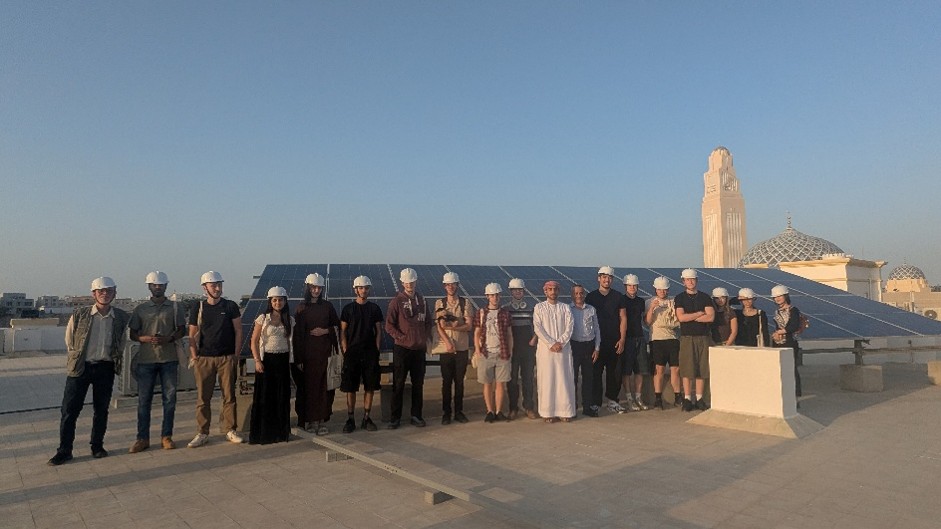
Perhaps the most valuable aspect of the exchange was meeting Omani students. Despite studying in different countries, we shared many of the same ambitions and challenges. Exchanging ideas about our projects, university life and future careers demonstrated how much can be learned through international collaboration and strengthened the friendship between our institutions.
I returned to the UK with far more than photographs and sketches. I came back with a deeper appreciation of climate-responsive design, cultural identity in architecture and the value of learning beyond the classroom. The experience not only broadened my perspective as an Architectural Technology student but also highlighted how meaningful British–Omani partnerships can inspire future designers to think more globally while remaining sensitive to local context.